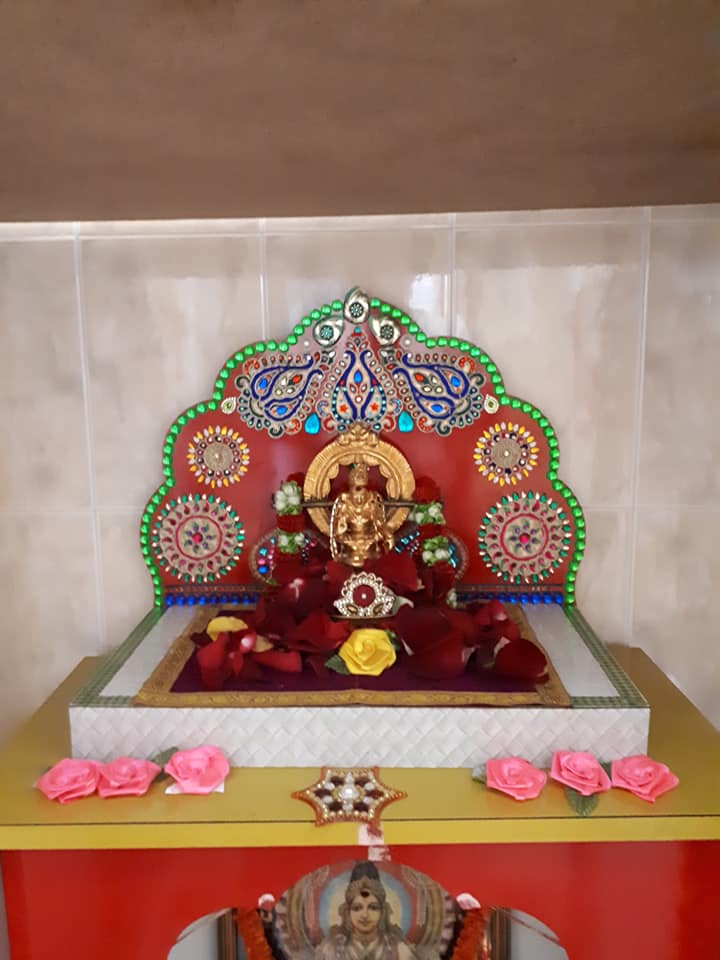
GOOD MORNING DEAR FRIENDS .. WISH YOU ALL A DIVINE " VARALAKSHMI PUJA " & A BLESSED FRIDAY TOO .. THIS PUJA IS PERFORMED MOSTLY BY MARRIED WOMEN FOR THE WELL BEING OF THEIR HUSBAND .. THIS IS THE MOST IMPORTANT FESTIVALS FOR ALL WOMEN & IS CELEBRATED & OBSERVED WITH GREAT BELIEF THAT WORSHIPPING GODDESS VARALAKSHMI ON THIS DAY IS EQUIVALENT TO WORSHIPPING " ASHTALAKSHMI " THE EIGHT FORCES OF ENERGY KNOWS AS WEALTH .. EARTH LEARNING .. LOVE .. FAME .. PEACE .. PLEASURE & STRENGTH .. MAY YOU BE BLESSED .. " JAI MATA DI SWAMY SARANAM...GURUVE SARANAM"

” வரம் தருவாய் அம்மா ! வரலக்ஷ்மி ! எங்கள் வாழ்வினில் மங்களம் அருள் லக்ஷ்மி ! 
ஆதிகேசவனின் அழகு மார்பினிலே வாசம் செய்கின்ற ஆதிலக்ஷ்மி ! தங்கக் கலசமுடன் சங்குச் சக்கரமும் தாங்கி அருளுகின்ற தனலக்ஷ்மி ! 
வெள்ளைப்பாற்கடலில் உதித்து மாலவனின் உள்ளம் ஆளுகின்ற கஜலக்ஷ்மி ! எம்மைக் காக்கவென்றே அன்னையாக வந்து தோற்றம் கொண்ட சந்தானலக்ஷ்மி ! வில்லும் அம்புடனும் சூலம் வாளுடனும் அபயம் அளிக்கின்ற வீரலக்ஷ்மி ! 
எட்டுக்கரங்களுடன் சுற்றிவரும் பகைகள் வெட்டி வீழ்த்துகின்ற விஜயலக்ஷ்மி ! மாயை இருள்களைந்து ஞானஒளியேற்றி முக்தி அளிக்கும் வித்யாலக்ஷ்மி ! 
அஷ்டலக்ஷ்மி வடிவாக வந்திருந்து இஷ்டம்பூர்த்தி செய்யும் வரலக்ஷ்மி ! உன்னை மனமுருக வணங்கும் பக்தரெலாம் உய்ய அருள் செய்வாய் ராஜ்யலக்ஷ்மியே”
அனைவருக்கும் என் அன்பார்ந்த காலை வந்தனங்கள் மங்களங்களையும் .. சகல ஐஸ்வர்யங்களையும் வாரிவழங்கும் வெள்ளிக்கிழமையில் .. அஷ்டலக்ஷ்மிகளும் ஒன்றாக வரலக்ஷ்மியாக நம் இல்லத்தில் திருவடி பதிக்கும் நன்னாளாகிய
“ வரலக்ஷ்மி விரதநாளில் “ அன்னையைத் துதித்து தங்களனைவரும் நீண்ட ஆயுள் .. புகழ் .. செல்வம் .. நல்லாரோக்கியம் பெற்று .. மகிழ்ச்சியுடன் வாழ பிரார்த்திப்போமாக !
ஓம் மஹாதேவ்யை ச வித்மஹே ! 
விஷ்ணுபத்ந்யை ச தீமஹி ! 
தந்நோ லக்ஷ்மீ ப்ரசோதயாத் !!
பௌர்ணமி தினத்திற்கு முன் வரும் வெள்ளிக்கிழமையில் “ வரலக்ஷ்மி விரதம் “ அனுஷ்டிக்கப்படுகின்றது .. சகலசௌபாக்கியங்களையும் தந்தருளும் அஷ்டலக்ஷ்மிகளை வணங்குவதால் “வரம்தரும் லக்ஷ்மிவிரதம் “ என்றும் இதனை அழைப்பர் ..
வரலக்ஷ்மி விரதம் என அழைக்கப்படும் இவ்விரதத்தை விவாகமாகிய சுமங்கலிப் பெண்களும் கன்னிப் பெண்களும் மஹாலக்ஷ்மியைக் குறித்து அனுஷ்டிக்கும் மிகச்சிறப்பான விரதமாகும் .. இவ்விரதத்தை அனுஷ்டிப்பதனால் இல்லத்தில் செல்வம் கொழித்து .. மகிழ்ச்சி களித்தோங்கும் கணவன் நீண்ட ஆயுளுடன் வாழ்வதால் மனைவியர் தீர்க்கசுமங்கலியாக வாழும் பாக்கியம் பெறுகின்றனர் .. கன்னிப்பெண்களுக்கு சிறப்போடு வாழும் சிறந்த கணவன் கிடைக்கப்பெற்று சிறப்பான குடும்பவாழ்க்கையும் அமையப் பெறுவர் என ஆகமங்கள் கூறுகின்றன ..
லக்ஷ்மிதேவி தன் பக்தர்களுக்கு பொருள்வளத்தை மட்டுமல்லாது உயர் ஞானத்தையும் அருள்கிறாள் அவள் வித்தியா சக்தியிலிருந்து நல்ல கல்வியும் தருகிறாள் .. அஷ்டலக்ஷ்மி ஸ்தோத்திரம் .. கனகதாரா ஸ்தோத்திரம் படிப்பதோ கேட்பதோ சிறப்பாகும் ..
மஞ்சள் கயிறு மங்கலத்தின் அறிகுறி .. அச்ஜ்டலக்ஷ்மிகளுடன் வரலக்ஷ்மியையும் சேர்த்து ஒன்பது லக்ஷ்மிகள் என்று சாஸ்திரம் சொல்கிறது .. எனவே ஒன்பது நூல் இழைகளால் ஆன ஒன்பது முடிச்சுகள் போடப்பட்ட நோன்புக்கயிறை (சரடை) பூஜையில்வைத்து .. பூஜையின் முடிவில் வலது மணிக்கட்டில் பக்தி சிரத்தையுடன் மூன்றுமுடிச்சுகள் போட்டு கட்டிக்கொள்ளவேண்டும் ..
அன்பு .. அமைதி .. புகழ் .. இன்பம் .. வலிமை ஆகிய இந்த சக்திகள் வரலக்ஷ்மியின் அம்சங்கள் .. எனவே நம்வாழ்வில் இந்த அம்சங்கள் யாவும் நிறைந்திருக்கும் .. மஞ்சள் குங்குமம் .. மஞ்சள் கயிறு .. பூ .. வஸ்திரம் .. மங்கள திரவியங்கள் .. உணவு முதலியவற்றை சுமங்கலிகளுக்கு தானமாகக் கொடுப்பார்கள் ..
“ எம் நெற்றியிலே உன் குங்குமமே நிறையவேண்டும் 
அம்மா ! நெஞ்சில் உன் திருநாமம் வழியவேண்டும் “

அகிலமெலாம் போற்றும் அகிலாண்ட நாயகியே ! 
எமை ஈன்ற ஆதிசக்தி தாயே ! போற்றி ! போற்றி ! 
“ ஓம் தீர்க்கசுமங்கலி பவ “ 
வாழ்க வளமுடனும் .. என்றும் நலமுடனும் .


Image may contain: 6 people No automatic alt text available.Image may contain: 1 person, indoorImage may contain: indoor

GOOD MORNING DEAR FRIENDS .. WISH YOU ALL A BLESSED SATURDAY & A DIVINE " AADI AMAAVASYA " DAY TOO .. AADI AMAAVAASYA IS THE NEW MOON DAY THAT FALLS IN THE TAMIL MONTH OF " AADI ".. (JULY - AUG) IT IS ONE AMONG THE THREE MOST POWERFUL NEW MOON DAYS TO OFFER TARPANAM RITUALS TO HONOR YOUR ANCESTORS & RECEIVE THEIR ETERNAL BLESSINGS BY OFFERING FOOD .. CLOTHING FOR THE POOR TOO .. IT HELPS THEIR SOULS ATTAIN MOKSHA (SALVATION) & ALSO CONFERS BLESSINGS UPON YOU .. " OM PITHRU DEVO BAWA "

அனைவருக்கும் என் அன்பார்ந்த காலை வந்தனங்கள் .. தட்சிணாயன புண்ணிய காலத்தின் தொடக்கமான ஆடிமாதத்தில் வரும் முதல் அமாவாசைத் திதியான இன்று .. நம்மைவிட்டு .. இவ்வுலகைவிட்டு நீங்கிய நம் மூதாதையர்களை நினைந்து வழிபடுவதற்கு உகந்த நாளாகிய 
“ ஆடி அமாவாசையாகும் “ .. நாம் நம் முன்னோர்களின் ஆராதனைக்குத்தான் முக்கியத்துவம் தரவேண்டும் .. இதனையே 
“பிதுர் தர்ப்பணம்” என்றழைப்பார்கள் ..
அமாவாசை என்றால் சூரியனும் சந்திரனும் நேர்கோட்டில் சந்திக்கும் நாளாகும் .. சூரியனை தந்தைவழி முன்னோராகவும் நினைந்து அவர்களது ஆன்மாவிற்கு மரியாதை செய்யும் விதமாக அமாவாசையன்று பித்ருக்களுக்கு தர்ப்பணம் தந்து வழிபடுவர் .. ஏழை .. எளியோர்க்கு வஸ்திரதானம் அன்னதானம் செய்வதும் சிறப்பு ..
ஆடி அமாவாசை விரதம் நமது முன்னோர்களைவேண்டி வணங்கும் விரதம் என்றாலும் .. இறந்த தந்தைக்காக பிள்ளைகள் அனுஷ்டிக்கும் விரதம் என்று கூறுவார்கள் .. கோயில் . குளம் .. நதிக்கரை .. கடல் போன்ற நீர்நிலைகளுக்குச் சென்று நீராடி .. நம் முன்னோர்களுக்கு எள்ளும் நீரும் விட்டு தர்ப்பணம் கொடுக்கவேண்டும் .. பின்னர் வீட்டில் முன்னோர் படங்களுக்கு மலர்ச்சரம் அணிவித்து அவர்களுக்குப் பிடித்த உணவு வகைகளுடன் .. பூசணிக்காய் .. வாழைக்காய் போன்ற காய்கறிகளையும் சமைத்து படைக்கவேண்டும் .. பின்னர் காகங்களுக்கும் .. அதிதிகளுக்கும் உணவளித்து அதன் பிறகே நாம் உண்ணுதல் சிறப்பு .. முன்னோர்கள் செய்த பாவ வினைகளும் நீங்கி அவர்களுக்கு முக்தி கிட்டும் .. நம் அனைத்து கர்மவினைகளும் நீங்கும் ..
ஆடி அமாவாசையில் நம் முன்னோரை நினைந்து வழிபடுவோம் ! அவர்களது ஆசியையும் பெற்றிடுவோம் .. “ ஓம் பித்ரு தேவோ பவ “ 
வாழ்க வளமுடனும் .. என்றும் நலமுடனும் ..
Image may contain: one or more people, people eating and food 
 Aadi 4th and last Friday Blessings to everyone of you GS
Image may contain: one or more people and indoor
No automatic alt text available.Image may contain: 1 person, indoorImage may contain: 1 person, smiling, indoor and food

சபரிமலை திருக்கோயிலில் மகளிரை அனுமதிப்பது பற்றிய வழக்கில் திரு பராசரன் அவர்கள் உச்ச நீதிமன்றத்தில் நிகழ்த்திய வாதத்தை மிகச் சிறப்பான முறையில் பல நண்பர்கள் தனியாகவும், பல்வேறு குழுக்களிலும் பகிர்ந்து கொண்டதை படித்து மகிழ்ந்தோம். அதே வழக்கில் இன்னுமொரு மிகச்சிறந்த வாதத்தினை உச்ச நீதிமன்றத்தில் எடுத்து வைத்துள்ள வழக்கறிஞர் திரு J.SAI DEEPAK அவர்களின் அற்புதமான வாதம் கீழே பகிரப்படுகிறது. இந்தியாவில் நீதி இன்னமும் உயிருடன் உள்ளது என்பதற்கு இத்தகைய மிகச் சிறந்த வழக்கறிஞர்களின் வாதங்கள் உதாரணமாகத் திகழ்கின்றன. அதனால்தான் பேரறிஞர் அண்ணா அவர்கள் சட்டம் ஓர் இருட்டு அறை. அதில் வக்கீல்களின் வாதம் ஒரு ஒளிவிளக்கு என்ற உண்மையைப் போட்டு உடைத்தார். நேரம் ஒதுக்கி , பொறுமையாகப் படித்து மகிழ வேண்டிய வாதங்கள் இவை. எனக்கு இந்த வாதங்களை அனுப்பி உதவிய திரு சு. ரங்கநாதன் அவர்களுக்கும் நமது நன்றிகள். முருகன் அருளால் நீதி வெல்லும்.


Brilliant submissions by Advocate Shri J Saideepak Aiyer before the Hon'ble Supreme Court in Sabarimala matter.
(Source :People for Dharma @People4Dharma)
1. J Sai Deepak started his submissions behalf of People for Dharma, Respondent no 18 and Chetana (an NGO associated with NCW)
2. JSD submitted that he will be continuing from the arguments of Adv Parasaran and Adv Giri
3. JSD stated that deity as a legal person is entitled to fundamental rights under article 25 and 21
4. JSD shall continue after lunch break
5. Post lunch, JSD recapped his pre-lunch submissions. He submitted that the rights of any worshipper under Article 25(1) is subject to other provisions of Part III of the Constitution as expressly provided by the language of Article 25(1). #Sabarimala
6. JSD submitted that it was therefore evident from the language of Article 25(1) that rights under the said Article are subject to the rights of religious institutions under Article 26, among other things. #Sabarimala
7. JSD submitted that therefore a worshipper cannot claim to have better rights than a religious institution citing Article 25(1).#Sabarimala
8. JSD then submitted that while Petitioner has been asserting rights under Article 25 (1), Temple has asserting rights under Article 26 & other devotees are asserting rights under Article 25(1) none has thus far mentioned the Deity's rights under Article 25 (1),21 & 26.
9. JSD submitted that judgements of the Privy Council and several judgements of the Supreme Court have recognised that the Deity has a juristic character and is therefore a legal person. #Sabarimala
10. JSD placed reliance on the 1925 judgement in Pramatha Nath Mullick v. Pradyumna Kumar Mullick (1925) 27 BomLR 1064, Yogendra Kumar v Commissioner of Income Tax 1969 AIR 1089
11. JSD also placed reliance on Ram Jankijee Deities v State of Bihar 1999 AIR SCW 1878 to prove that the Deity at #Sabarimala has legal personage.
12. JSD submitted that applying the spirit of the Boston Tea Party, if the Deity's property can be taxed, it can also enjoy rights under Article 25(1),21 & 26. #Sabarimala
13. JSD submitted that the Deity has rights to practice and preserve its Dharma, including its vow of Naishtika Brahmacharya under Article 25(1) and has the right to expect the privacy of that character under Article 21. #Sabarimala
14. JSD submitted that it is the vow of Deity that is implemented as the tradition of the #Sabarimala Temple, which therefore brings into the picture Article 26(b).#Sabarimala
15. JSD submitted that when all these rights of the Deity are stacked on the one hand along with the rights of devotees, men & women who observe the tradition, the Petitioner surely cannot claim that its rights under Article 25(1) must prevail over everyone else's rights.
16. JSD submitted that even without having to resort to Article 26(b), as submitted by Shri Parasaran, it is possible to establish based solely on Article 25(1) that Petitioner does not have a case under Article 25(1).
17. JSD submitted that legally a worshipper cannot claim to have greater rights to worship than the rights of the Deity who he or she claims to worship and whose traditions he or she has no respect for. #Sabarimala
18. JSD submitted that the issue in Petition was not about Temple v women or men or women but men v men and women v women. #Sabarimala
19. JSD submitted that if the Petitioner's contentions were allowed, it would be possible for men who don't observe the 41-day vow to also claim right of entry into the #Sabarimala Temple citing Article 25(1), similar to the Petitioner.
20. JSD submitted that if the Petitioner's contentions were accepted, a Hindu might say that he wants to offer chicken to Lord Ganesha citing Article 25(1), a Muslim may want to offer non-Halal food as Tabarrukh, a Sikh may want to offer something which is prohibited.
21. JSD wondered where would such assertions end and what would they lead to if not erosion of the practices and traditions of places of worship. #Sabarimala
22. JSD then proceeded to address the issue of Public character of the #Sabarimala Temple. He submitted that the public character of the Temple only reflects its access to the public, but does not in any way take away its denominational identity and its rights Article 26.
23. JSD submitted that rights of religious institutions under Article 26 were not contingent on the institution having a private character. #Sabarimala
24. JSD submitted that infact the right to preserve the denominational identity is available to the religious institution regardless of whether it is a public institution or a private institution. #Sabarimala
25. At this point, the CJI enquired from JSD as to how does the #Sabarimala Temple qualify for rights as a denominational Temple under Article 26.
26. In response to the query, JSD placed reliance upon the definition of a religious denomination as distilled by the 7-judge Bench of the Supreme Court in the Shirur Mutt case. #Sabarimala
27. The CJI asked JSD to apply the definition to Ayyappa devotees to establish that they constituted a denomination since there no specific "Ayyappa sect"
28. JSD pointed out that during the course of hearings in the matter, the CJI himself had observed that the status of a religious denomination is not bestowed by the Court but is something that comes from within the community itself. #Sabarimala
29. JSD submitted that applying the same logic, since Ayyappa devotees share a common faith in Lord Ayyappa, respect the practices associated with the worship of Lord Ayyappa, they would qualify as a religious denomination. #Sabarimala
30. The CJI then asked JSD that since Ayyappa devotees come from other faiths, would it still be possible to call them a religious denomination. #Sabarimala
31. To this, JSD submitted that this is where Hinduism differs from other faiths, especially from the rigid definition of denomination as observed by Christians. #Sabarimala
32. JSD submitted that the definition or understanding of religious denomination cannot be applied uniformly to different faiths and certainly not by applying the Anglican/Christian meaning to Hinduism. #Sabarimala
33. JSD submitted that definition of religious denomination as far as Hinduism is concerned must be applied from the standpoint of whether the devotee puts faith in the Deity, and the beliefs and practices associated with the Deity, regardless of the background of devotee
34. JSD submitted that those who observed the practices associated with the worship of Lord Ayyappa would constitute a denomination regardless of the background they come from.
35. The CJI then asked if the Chief Priests of the Temple were chosen from a certain backdrop or sect in order for the Temple to have a denominational character. #Sabarimala
36. The CJI further enquired if the administration of the Temple is in the hands of a particular sect for it to have a denominational character. #Sabarimala
37. To this, JSD responded that the Chief Priests follow a specific tradition which is informed by the nature of the Deity and the attendant restrictions. This lends the character of a denomination to the Temple #Sabarimala
38. JSD further submitted that denominational character of a Temple is certainly not undermined or diluted by fact that members outside denomination are employed in administration of the Temple since that would mean taking a narrow approach to denominational institutions
39. JSD further submitted that if such a rigid test were to be applied, even the Chishti Dargah in Ajmer wouldn't be entitled to treatment as a denominational institution. #Sabarimala
40. Justice Nariman pointed out that the Chishti Dargah is administered entirely by the Chishtiya Sufis which could not be said of the #Sabarimala Temple.
41. JSD submitted that test of whether a group falls within definition of religious denomination is whether it has specifically identified tenets which gives birth to practices & traditions which are informed by & consistent with tenets & which affects its administration
42. JSD submitted that the #Sabarimala Temple satisfied each of the above requirements and would therefore qualify as a religious denomination. #Sabarimala
43. JSD then pointed out that to compare the #Sabarimala Temple with any other institution to vest it with or to deny it a denominational identity would not be correct given the peculiar history of the Temple.
44. JSD pointed out to the Court that what the Court had not been informed thus far was the existence of the Vavar tomb which is related to the history of #Sabarimala
45. JSD submitted that if rigid test of religious denomination suggested by Justice Nariman were to be applied mere presence of Vavar in history of #Sabarimala would disentitle it frm being treated as religious denomination thereby ignoring diversity in Hindu tradition
46. JSD submitted that in any case, even without Article 26, it is possible to protect and preserve the nature of the Deity through Article 25(1) which obviates the need to fall back on Article 26.
47. At this stage, the CJI observed that he agrees with the reliance on Article 25(1) to protect the nature of the Deity. JSD seeks permission to proceed to the next limb of his submissions. #Sabarimala
48. JSD submitted that while the Petition has given the impression that discrimination based on menstruation is the very basis and object of the restriction placed on women, it is a distortion of the actual position. #Sabarimala
49. JSD submitted that the primary object of the religious practice was not exclusion of menstruating women. The primary object was to preserve the celibate form of the Deity. #Sabarimala
50. JSD submitted that the observance of the vow of Naishtika Brahmacharya itself translates to imposition of a few conditions, one of which is to avoid contact with the opposite gender. #Sabarimala
51. JSD submitted that the rules proscribing contact with the opposite gender applies to a Brahmachari as well as a Brahmacharini. This can't be given the hue of misogyny or misandry. #Sabarimala
52. JSD submitted that, as observed by Justice Nariman himself during Dr. Singhvi's arguments, nowhere has the Temple or the Thanthri taken the view that the restriction is based on "impurity of menstruation", unlike the Haji Ali Dargah case.
53. JSD pointed out that the trustees of the Haji Ali Dargah had taken the position that the presence of a menstruating woman near the Dargah of a Muslim Saint was sinful in Islam. No such position has been taken by the Temple or the Thanthri. #Sabarimala
54. JSD submitted that the Petitioner chooses to distort the very basis and object of the practice and expects the Temple to answer for a position it has never held, which is unfair to the Temple. #Sabarimala
55. JSD pointed out that the practice has two sides,where one flows from the other. Preservation of the Brahmachari character of the Deity is the primary object from which the restriction on women flows. #Sabarimala
56. JSD submitted that in view of the clear basis of the practice, the use of the term "discrimination" by the Petitioner was extremely loose. #Sabarimala
57. JSD submitted that the term discrimination could be used only if the entire focus of Temple and its practices was to keep "all women" out without there being a nexus to Deity's character.
58. JSD submitted that all exclusion is not discrimination especially when the object of the rule has nothing to do with misogyny or impurity of menstruation. #Sabarimala
59. JSD submitted that if the Petitioner's approach to discrimination were to be accepted, it would result in destruction of diversity of religious traditions in India. #Sabarimala
60. JSD pointed out the existence of prominent Ayyappa Temples in Kerala where the Deity is not a celibate and where there is no restriction on entry of women. Clearly, this was proof of diversity and not discrimination. #Sabarimala
61. JSD also pointed out the example of the Chengannur Mahadeva Temple as well as the Panchubarahi Temple in Odisha where 5 Dalit priestesses worship the Deity
62. and no man has been allowed to enter in the last 400 years except this year when men where needed to shift the idols in view of the rising level of the sea.
63. JSD pointed out that the prayer sought by the Petitioner, as noted by the Court in its order of reference, clearly called for law to be laid down on gender equality for all places of worship, which would require the Court to interfere with every place of worship.
64. JSD submitted that if the blunt approach of the Petitioner to gender equality and discrimination were applied across the board, not one place of worship would be able to preserve its practices
65. because the Petitioner doesn't strike a distinction between diversity and discrimination.
66. At this stage, the CJI and Justice Nariman asked JSD as to how does the Court strike a balance between competing rights under the Constitutional framework. #Sabarimala
67. JSD submitted that balance is indeed the guiding principle and the churn for balance between competing rights led to the formulation of the essential and integral part of the religious practice test, in short the essentiality test. #Sabarimala
68. JSD submitted that the essentiality test is a consequence of a social contract between a State governed by the Constitution and religion. #Sabarimala
69. At this stage, Justice Chandrachud observed that the essentiality test applied only to Article 25(2)(a) in context of HRCE legislations and to an analysis of competing rights under Article 25(1).#Sabarimala
70. Justice Chandrachud further observed that the essentiality test requires courts to wear the hat of a theologian which it should not be.
71. JSD submitted two-fold responses to these observations of Justice Chandrachud.
72. JSD firstly submitted that if the Court ought not to wear the hat of the theologian at all, it ought not to for both Articles 25(1) & 25(2)(a).
73. JSD also pointed that if Justice Chandrachud's position were to be accepted, the entire catena of judgments, including of a seven Judge Bench, would need to be reversed by a larger Bench. #Sabarimala
74. JSD also pointed that the Court had been wearing the hat of a theologian in every case which concerns a religious practice, most recently the Haji Ali Dargah case and the Triple Talaq case, both of which required the Court to go through the Quran and the Hadiths.
75. JSD secondly pointed out that the essentiality test was equally applicable, useful and relevant to an analysis of competing rights under Article 25(1) since the essentiality test strikes the right balance between constitutional morality and religion. #Sabarimalacase
76. After this, Justice Nariman and the CJI asked JSD to proceed to the next limb of his submissions. #Sabarimala
77. JSD then proceeded to submit the position with respect to Article 290-A on the issue of whether the #Sabarimala Temple was being maintained out of the funds drawn from the Consolidated Fund of India.
78. JSD placed before the Court the history behind Article 290-A, which he traced to Merger Covenants between the Indian Union and the Princely State of Travancore. #Sabarimala
79. JSD pointed out to the Court that the Indian State had inherited the obligations and liabilities of the erstwhile Princely State of Travancore, including the obligation to pay annuities to Devaswom Boards for lands taken over by the Princely State
80. JSD placed before the Court 1922 proclamation of the erstwhile Maharaja of Travancore where in return for taking over the lands of the Temples in Travancore, he had declared to pay an annuity of INR 16 lakhs for the running of the Temples in the Travancore Devaswom.
81. In other words, the Travancore State was paying annuities in lieu of Temple lands it had taken over. This obligation was inherited by the Indian State since it took over the Temple lands from the Princely State.
82. JSD, therefore, pointed out that it was incorrect to give the impression that the Travancore Devaswom Board and the Sabarimala Temple were being run by State funds and therefore were State bodies. were being run by State funds and therefore were State bodies.
83. JSD further submitted that the Petitioner's interpretation of Article 290-A was not only based on ignorance of the true history of the provision but also contrary to Article 27
84. JSD pointed out Article 27 prohibits use of tax payer money for the promotion of a certain faith. Therefore 290A couldn't have gone directly against Article 27. Clearly, the money being given to the Devaswom Board was its right and not state largesse
85. Justice Indu Malhotra asked JSD for similar examples, to which JSD pointed out Sections 66/67 of the Kerala Land Reforms Act and Section 6 of the Shree Pandaravaka Lands Act, 1971
86. After this, Justice Nariman and the CJI asked JSD to proceed to the next limb of his submissions. #Sabarimala
87. JSD then proceeded to address the issue of validity of the notification regarding age restriction and the challenge to Rule 3(b).
88. JSD pointed out that the Petitioner had first of all failed to challenge the notification in their Petition and had challenged only Rule 3(b) of the Kerala Places of Public Worship Rules, 1965 which restricts entry of women in accordance with prevalent customs
89. JSD submitted that he would nevertheless address challenge to the notification as well as the Rule.
90. JSD submitted that while he agreed with Justice Nariman's observations earlier in the hearings regarding the arbitrariness of the age prescription in the notification, it would not affect the validity of the Rule in any manner.
91. JSD submitted that the if the challenge is only to the notification, it can simply be reworded to make it consistent with the Rule and with the object of restriction of women with reproductive capabilities instead of prescribing an age limit
92. JSD submitted that since the Petitioner's fundamental challenge was to Rule, it becomes imperative to understand the problem with the challenge
93. JSD submitted that the Rule regarding entry of women in accordance with custom was first of all applicable to all Temples which fall under the Kerala Places of Public Worship Act 1965 and not just the #Sabarimala Temple.
94. Therefore, striking down the Rule would have consequences for other Temples as well. In this regard, JSD submitted that the Rule was in fact a codification of existing customs and practices in Kerala Temples.
95. To support this, JSD drew attention to Rule 3(c) which the Petitioner had not challenged, which relates to prevention of entry of ppl on account of pollution caused by birth or death
96. JSD submitted that if the challenge to Rule 3(b) was allowed, nothing would stop the Petitioner from seeking to strike down Rule 3(c) as well on the grounds that the said provision too was discriminatory.
97. JSD pointed out that restrictions associated with birth and death too were part of the existing customs and Petitioner's blunt approach to discrimination would see discrimination even in such cases without any regard to custom.
98. Further, since the Petitioner had failed to demonstrate through clear evidence that Rule 3(b) was based on misogyny, no interference by the Court was warranted.
99. To a question from Justice Nariman on the validity of the State passing Rule 3 on the anvils of Article 14 & 15, JSD submitted that since the Rule was a codification of existing practices, striking down the Rule would lead to abolition of the custom itself.
100. JSD submitted that in order for the Court to strike down the Rule and thereby abolish the custom, it must first satisfy itself that Rule is indeed based on misogyny, on which no evidence has been led by the Petitioner thus far except for an assertion
101. JSD submitted that while the Respondents had led a mountain of evidence to show that the practice is based on the celibate nature of the Deity, no evidence had been led by the Petitioner to prove misogyny as the basis except for unwarranted conclusions
102. Therefore, JSD submitted that the best way forward to call the bluff of both parties is to direct them to lead evidence on the issue so that it can be thrashed out objectively.
103. At this stage, on enquiry by Justice Indu Malhotra, JSD pointed out extracts from the Tamil Translation of Bhoothanatha Upakhyanam, the Sthalapuranam of Sabarimala, to prove the celibate nature of the Deity.
104. JSD submitted that the extract from Bhoothanatha Upakhyanam is a statement from the Deity Himself about His eternal vow of Brahmacharya.
105. Justice Nariman observed that JSD's submissions were instructive and thanked him for his assistance to the Court.
106. THE CJI observed that not only was it instructive but was also an impressive articulation with both rhetoric and logic.
107. The Bench asked JSD if he had anything more to submit. JSD submitted that the issues in the matter could be better resolved through evidence and through reference to a 15th century treatise on the practices of Kerala Temples by the name "Tantrasamuccaya"
108. During the course of his submissions, JSD also placed reliance on Sections 3 & 4 of the Places of Worship (Special Provisions) Act, 1991 to contend that legally the religious character or denomination of the Temple cannot be changed #sabarimala
109. Which would be the effect of ignoring the celibate character of the Deity or to claim that the Temple is of Buddhist origins. #Sabarimala
110. Finally, JSD thanked the Bench for the opportunity and for a patient hearing. JSD concluded his submissions.
111. After JSD, Shri Kailashanatha Pillai, Senior Advocate for other intervenors commenced his submissions with the statement that he himself had learned a lot from the submissions of J Saideepak and wanted to build on his submissions.


================================================
 To day is Aadi Perruku and also Aadi 3rd Friday. My best Wishes and Blessings to everyone of you Blessings GS


OOD MORNING DEAR FRIENDS .. WISH YOU ALL A BLESSED & A DIVINE " GURUPURNIMA " MAY THE GURU'S BLESSINGS ALWAYS SHOWER ON YOU .. GURUPURNIMA FALLS ON A FULL MOON DAY IN THE HINDU MONTH OF ASHDH WHICH IS JULY - AUGUST .. AMONG HINDUS THE DAY IS CELEBRATED TO PAY HOMAGE TO MAHARSHI VEDA VYASA .. THE SAGE WHO EDITED THE SACRED HINDU TEXT .. THE VEDAS & WROTE 18 PURANAS " MAHABHARATA " & THE SRIMAD BHAGAVATAM " ALL THESE RELIOUS SCRIPTURES LAY THE FOUNDATION OF HINDU RELIGION .. GURU IS A SANSKRIT WORD .. GU MEANS - DARKNESS & RU MEANS - REMOVAL OF THE DARKNESS .. THEREFORE A GURU IS ONE WHO REMOVES DARKNESS & IGNORANCE ON THIS DAY PEOPLE PAY THEIR RESPECT TO THEIR GURU & EXPRESS THEIR GRATITUDE TOWARDS THEM .. " JAI SHREE GURUDEVO NAMAHA ! OM SAI RAM "

" குருவந்தனம் செய்வோம் ! தாய் தந்தை தோழனுமாய் உற்றதொரு வழித்துணையாய் நினைத்தும் வந்தெம்மை ஆட்கொள்ளும் குருபரா ! வேப்பந்தருநிழலில் அமர்ந்தே எமைக்காத்தாய் ! பூவுலகில் என்றுமுன் சமாதியில் இயங்குகிறாய் வணங்கும் உன் பக்தருக்கே ஆசிகள் பல அளிப்பாய் ! 
ஓம் குருநாதா ! ஜெய ஜெய சாய் ராம் “
அனைவருக்கும் என் அன்பார்ந்த காலை வந்தனங்களும் “ குருபூர்ணிமா நல்வாழ்த்துகளும் “ உரித்தாகுக .. முழுநிலவு பொழியும் ஆடிமாதப் பௌர்ணமித் திருநாளில் முழுமை நிலையில் தனக்குள் இருக்கும் குருத்தன்மையை உணர (ஆத்ம) அனைத்து உயிருக்கும் சாதகமாக அமைந்த நாள்தான் “குருபூர்ணிமா” ..
குருபௌர்ணமி என்பது சாதாரண உயிர்கூட முழுமையை உணர்ந்து இறைநிலையை நோக்கி உயரக்கூடியத் திருநாள் .. எந்தவிதமான காரணமும் இல்லாமல் .. எந்தவிதமான பிரதியுபகாரங்களையும் எதிர்பாராமல் வெறும் கருணையினால் மட்டுமே நமக்கு ஞானச்செல்வத்தை அள்ளித்தரும் குருநாதருக்கு எமது அக வாழ்விற்கும் வழிகாட்டி .. தன்னையுணர வழிசெய்த அனைத்து குருநாதருக்கும் நன்றிக்கடன் செலுத்தக்கூடிய திருநாளே குருபூர்ணிமா இன்று குருநாதரின் பாதங்களின் அருகில் இருப்பதே பூர்வஜென்ம புண்ணியமாகும் ..
எனவே இவ்வாறான சிறப்பம்சங்களும் .. சர்வ வல்லமை பொருந்திய பூரணை தினத்தில் குருவினை எண்ணியிருந்தாலே கோடிபுண்ணியம் .. குருநாமம் ஜெபித்தாலே வினைகள் எல்லாம் தீரும் .. தாங்கள் பெற்ற கல்விச் செல்வம் மென்மேலும் வளர்ந்து தங்கள் வாழ்வும் ஒளிமயமாகத் திகிழும் ..
அவாறெனின் குருவினை சரணடைந்து குருவுடனிருந்து தியான ஜெபங்களில் ஈடுபட்டு .. குரு உபதேசம் கேட்டு .. குருவினால் வழங்கப்படும் அன்னப் பிரசாதத்தினை உண்ண வாய்ப்புக்கிட்டுமெனின் அது சர்வ நிச்சயமாக பூர்வஜென்ம புண்ணியங்களின் பலனேயாகும் ..
ஒவ்வொருவருடமும் வரும் குருபூர்ணிமா அல்லது வியாசபூர்ணிமா என்று அழைக்கப்படும் இந்நாளில் சன்னியாச ஆசிரமத்தில் இருக்கும் சன்னியாசிகள் வியாசபூஜை செய்து வேதவியாசரை ஆராதிப்பார்கள் வியாசர் என்றால் வேதங்களின் உட்பொருளை அனைவரும் தெரிந்துகொள்ளும் வகையில் விளக்கமாக எடுத்துச் சொல்பவரை வியாசர் என்றழைப்பார்கள் ..
தவறாது குருபௌர்ணமியாகிய இன்று இறை ஆராதனைகளில் கலந்துகொண்டு எம்மையெல்லாம் ஆட்கொண்டு வழிநடத்தும் ஞானகுருவுக்கு நன்றி செலுத்துவதுடன் குருவின் கரங்களை இறுகப்பற்றிக்கொண்டு இவ்வுலகின் துன்பக் கடலினைக் கடந்து செல்வோம் ! 
“ ஓம் நமோ பகவதே குருதேவாய நமஹ “ 
வாக வளமுடனும் .. என்றும் நலமுடனும் ..

SOME ARGUMENTS REGARDING ADMISSION OF LADIES TO SABARIMALA IS PUBLISHED HERE......SWAMY SARANAM...


 1. Arguments in the #Sabarimala Petition resume. Mr. Parasaran now argues for the Nair Service Society. 

2. Mr. Parasaran submits that Kerala is an educated society

 3. Mr. Parasaran submits that 96% of the women in Kerala are educated. They are independent. It is a matrilineal society. Therefore to assume that the practice of the #Sabarimala Temple is based on patriarchy is fundamentally incorrect

 4. Mr. Parasaran submits that the practice of the #Sabarimala Temple is not comparable to Sati. In fact, Sati itself has not connection to the Hindu faith. 

5. Mr. Parasaran cites the examples of the wives of Dasaratha and Kunti to prove that they did not commit Sati after their husbands' death. #Sabarimala

 6. Therefore Mr. Parasaran submits that we should not approach the issue of #Sabarimala with notions of patriarchy 

7. Mr. Parasaran says that a right question will lead to the right answer, a wrong question will lead to the wrong answer. #Sabarimala

 8. Mr. Parasaran submits that if a person asks "can I smoke when I pray?" he will get a slap. But if he asks "can I pray as I smoke?" he will be appreciated. #Sabarimala 


9. Therefore, Mr. Parasaran says the right questions must be asked in this case for the Court to get the right answers. #Sabarimala 

10. Mr. Parasaran further submits that in this case he has to be even more careful and prepared because he is answerable not just to the Lordships but also the Lord above.

 11. Mr. Parasaran is now reading out portions from the Shirur Mutt decision of the Supreme Court. 

12. Mr. Parasaran submits that even democracies, especially democracies, must protect religion and tradition. 

13. Mr. Parasaran submits that Hindu religion respects merit and wisdom wherever it comes from. He says for neeti, it is still Vidura neeti which is cited. That is the greatness of the faith. 

14. Mr. Parasaran submits that while the court must listen to activist voices, it must equally listen to voices which seek to protect tradition. 

15. Mr. Parasaran submits that the Legislature is Brahma, Executive is Vishnu and Shiva is judiciary because only Shiva's ardhanarishwara form epifies Article 14, equal treatment of both sexes.

16. Mr. Parasaran submits that Shiva is no Brahmachari, but even when his meditative state was sought to be disturbed by Kama Deva, he was reduced to ash because he failed to respect that state of Shiva. 

17. Mr. Parasaran submits that we must not proceed with the presumption that the ancients knew nothing and that we know better in all aspects of life. 

18. Mr. Parasaran that Lord Ayyappa's character as a Naishtika Brahmachari is protected by the Constitution. 

19. Mr. Parasaran is placing reliance on the judgment of the Court in Tilkayat Govindaji Maharaj (1964). 


20. Mr. Parasaran refutes the argument of the Petitioner that some women may die before they reach the age of 50, Mr. Parasaran says that a person carries her or his fate with him. That's not a legal consideration to reverse the tradition.


21. Mr. Parasaran points out that there are thousands of ppl who register for Padi Pooja at #Sabarimala, the consequence being that the pooja will be conducted in their name only long after their deaths.

 22. Mr. Parasaran therefore submits that using death as an argument to upset the tradition is neither here nor there.

 23. Mr. Parasaran submits that the basis of the practice is the celibate nature of the Deity, not misogyny. Devotees who visit the Temple too are expected to observe celibacy in letter and spirit. Hence, during the journey, company of women must be avoided. 

24. Mr. Parasaran is reading out portions from the Sundarakanda of the Ramayana to explain the concept of Naishtika Brahmacharya

25. Mr. Parasaran submits that Lord Ayyappa is a yogi. To define who a Yogi is, Mr. Parasaran is quoting Adi Sankara.

 26. Mr. Parasaran submits that misogyny is not supported by Hindu Shastras nor is chastity the sole obligation of the woman. In fact, chastity is a greater obligation on the man and he is duty bound under the Shastras to give a pride of place to the woman

 27. Mr. Parasaran submits that the practice in Sabarimala by no stretch of imagination is informed by misogyny. The only consideration is the nature of the Deity. 

28. Mr. Parasaran now proceeds to address Article 25. 
\
29. Mr. Parasaran submits that Article 25(2)(b) applies only to social reform, it still does not apply to matters of religion covered by Article 26 (b). 

30. Justice Chandrachud wonders if Article 25(2)(b) applies to only Hindu institutions. Mr. Parasaran responds that the practice sought to be addressed by the said Article is peculiar only to Hindu institutions.


 32. Mr. Parasaran resumes submissions post lunch. Mr. Parasaran submits that women do not fall under the protection of Article 25(2) 

33. Justice Nariman asks- will not scheduled caste women be protected by Article 25(2)? Mr. Parasaran disagrees and says 25(2) treats the community as a class, not on the basis of gender. 34. Mr. Parasaran submits that even Article 15 does not apply to religious institutions which is evident from the language of the Article itself. This was a conscious exclusion since an amendment to include religious institutions was rejected. 


35. Justice Chandrachud observes that perhaps Article 25(2) may not apply to the rule under challenge. But asks what provision acts as a limitation on the rights of religious denominations under Article 26.


36. Mr. Parasaran submits that Article 25(2) deals only with secular aspects and right of entry of classes or sections. It does not therefore apply to religious aspects or right of entry based on gender.

 37. The CJI asks Mr. Parasaran to shed light on the Constituent Assembly debates on the relevant Articles of the Constitution. Mr. Parasaran is now walking the Court through the debates. 

38. Justice Nariman asks - "Therefore Mr. Parasaran, are you saying that the core object of Article 25(2)(b) is connected to the object of Article 17?" Mr. Parasaran answers in the affirmative. 

39. Justice Nariman asks - "why do we need two provisions for the same object?" Mr. Parasaran submits that while Article 17 applies generally, Article 25(2) applies specifically to Temples.


 40. Mr. Parasaran further submits that Article 25(2) reiterates the object of Article 17 in the specific context of Temples and Hindus to send a loud and clear message.


41. Mr. Parasaran submits that if the intention of the Constituent Assembly was to include religion in Article 15, they would have.

 42. Justice Nariman agrees with Mr. Parasaran's interpretation of Articles 15(2) and 25(2)

43. Justice Nariman agrees that the object of Article 25(2) and Article 17 are the same i.e. To address caste based untouchability and not gender. 


44. Mr. Parasaran says that he does not even need to make his case under Article 26 because he has a solid case under Article 25 itself. 

45. Justice Nariman says - "assume that we agree with your submissions, then pls explain to us why can't the state fall back on 25(2) citing religious reform? Also what about the rights of women under Article 25(1)?“


 46. Mr Parasaran submits that the present case does not involve a social issue but a religious issue. By using 25(2), u will reform a religion out of its identity.:

47. Justice Nariman agrees with the submission of Mr. Parasaran on the inapplicability of Article 25(2) to the issue at hand 

48. Mr. Parasaran is now walking the Court through judgements on rights of religious denominations. 49. Mr. Parasaran submits that by abolishing the practice, the very character of the religious institution will be irreparably altered which affects the rights of devotees under Article 25(1). 50. Mr. Parasaran digresses and submits that Constitutional law is his first love and that it is his privilege to argue in this matter when he has otherwise stopped taking up matters.


 56. Mr. Parasaran points out that the said provision requires the Board to observe and maintain the practices of Temples under its administration. 57. Mr. Parasaran is now going through the Constituent Assembly debates to show the history of Articles 14, 15 & 25. 58. Mr. Parasaran is reading portions of the debates which relate to Article 17, which clearly show that the Article deals only with caste-based untouchability.

 59. Mr. Parasaran is reading out extracts from the Interim Report on Fundamental Rights with respect to Articles 15, 17 and 25(2)(b). 60. Mr. Parasaran specifically shows the rejection of the amendment of Article 15 by the Constituent Assembly with respect to inclusion of religious places.

 51. Mr. Parasaran is placing reliance on the Jantia Hills District case. 52. The citation of the judgement is 2006(4) SCC 748 53. Mr. Parasaran is citing the creation of another heaven for Trishanku by Vishwamitra as an example of the consequence of over activism. And submits that the Petition at hand is a case in point.

 54. Mr. Parasaran is now walking the Bench through the Travancore Cochin Hindu Religious Institutions Act, 1951. 55. Mr. Parasaran is citing Section 15A(1) of the 1951 Act which deals with duties of the Travancore Devaswom Board.


61. Mr. Parasaran is reading out portions from debate of November 29,1948 to support his position on Article 17 that it relates only to religion and caste based untouchability 
62. Mr. Parasaran submits that even if Article 25(2) applies to women, it is only with respect to social issues but not religious issues. 

63. Mr. Parasaran further submits that Article 25(2)(b) is at best an enabling provision for the Legislature, it doesn't enable the judiciary.

 64. Mr. Parasaran submits that there are several other famous Ayyappa Temples in Kerala itself which allow entry of women without age restrictions. Therefore, the #Sabarimala Temple is not a case of discrimination. 


65. Mr. Parasaran is thanking the Bench for a patient hearing. He has concluded his submissions. 66. The Bench will hear the Counsels for the remaining Respondents and Intervenors tomorrow

GOOD MORNING DEAR FRIENDS .. WISH YOU ALL A BLESSED TUESDAY & A DIVINE MONTH OF " AADI " .. THE TAMIL MONTH OF AADI IS A DIVINE MONTH MONTH FILLED WITH POWER .. PROTECTION & SPIRITUAL BLESSINGS OF GODDESS MAA SHAKTHI .. STAY BLESSED .. "JAI MAATA DI " ..

” நெஞ்சினிலே நிறைஞ்சிருப்பா ! 
நிம்மதியைத் தந்திடுவா ! 
வஞ்சகரின் வாழ்வறுப்பாள் ! 
வந்தவினை தீர்த்திடுவா ! 
மஞ்சளிலே குளிச்சி நிப்பா ! 
சிங்காரமாச் சிரிச்சு நிப்பா ! 
தஞ்சம் என்று வந்துவிட்டா தயங்காம காத்து நிப்பா “
அனைவருக்கும் என் அன்பார்ந்த காலை வந்தனங்கள் ஆடிச்செவ்வாய் முதல்வாரமும் .. ஆன்மீக மணம் கமழும் ஆடிமாதத்தின் ஆரம்பநாளுமாகிய இன்று அன்னையைத் துதித்து நோய்நொடிகள் நீங்கி நல்லாரோக்கியமும் பெற்றிட பிரார்த்திப்போமாக !
ஓம் பிசாசத்வஜாய வித்மஹே ! 
கட்க ஹஸ்தாய தீமஹி ! 
தந்நோ மாரீ ப்ரசோதயாத் !!
” ஆடிச்செவ்வாய் தேடிக்குளி “ என்பது ஒரு பழமொழி .. அதாவது விரதமிருந்து எண்ணை தேய்த்து குளித்து அம்பாளை வழிபட பெண்களின் மாங்கல்ய பலம்கூடும் என்பது ஐதீகம் ..
இன்றுமுதல் ஆடிமாதம் ஆரம்பமாகின்றது .. தேவர்களின் பகல்பொழுது முடிந்துவிட்டது .. தேவர்களின் இரவுப் பொழுதான தக்ஷிணாயன புண்யகாலம் ஆரம்பிக்கின்றது .. இதனைமுன்னிட்டு பித்ருகாரகனான சூரியபகவான் நேற்றுமாலையே மாத்ருகார்கனான சந்திரனின் வீட்டில் தஞ்சம் அடைந்துவிட்டார் .. இன்னும் ஒருமாதத்திற்கு அங்கிருந்து ஆடிமாதத்தை சிறப்பிக்கப்போகிறார் ..
வருடத்தை இரு அயனங்களாகப் பிரித்துள்ளனர் .. 
தைமுதல் ஆனிவரை - உத்தராயனம் .. இதுவே தேவர்களின் பகல் காலமாகும் .. 
ஆடிமுதல் மார்கழிவரை - தக்ஷிணாயனம் .. இதுவே தேவர்களின் இரவுக்காலம் .. நம்முடைய ஒருவருடகாலம் என்பது தேவர்களின் ஒருநாள்தான் ..
தக்ஷிணாயன புண்ணிய காலமான ஆடிமாதத்தில்தான் பூமாதேவி அவதரித்ததாகச் சொல்கின்றன புராணங்கள் .. இந்த மாதத்தில் வரும் திதி .. நட்சத்திரம் மற்றும் கிழமைகள் யாவும் மகிமை வாய்ந்தன என்று ஜோதிட சாஸ்திர நூல்கள் பலவும் சிறப்பிக்கின்றன ..
பார்வதிதேவியின் தவத்தை மெச்சிய பரமசிவன் ஆடிமாதம் அம்மன் மாதமாக இருக்கவேண்டும் என வரம் அருளினார் .. சிவனுடைய சக்தியைவிட அம்மனுடைய சக்தி ஆடிமாதத்தில் அதிகமாக இருக்கும் .. ஆடிமாதத்தில் மட்டும் சிவன் சக்திக்குள் அடக்கமாகிவிடுகிறார் என்பது ஐதீகம் ..
மழைக்காலத் துவக்கமான ஆடியில் நல்லமழை வேண்டியும் .. உடல் நலம் பெறவும் நம் முன்னோர்கள் பல பண்டிகைகளைக் கொண்டாடி அம்மனுக்கு வழிபாடு நடத்தி வந்துள்ளனர் .. வேம்பும் .. எலுமிச்சையும் அம்மனுக்குப் பிடித்தமானவை .. கூழும் விருப்பமானதே ! இவை உடல் நலத்திற்கும் .. வியாதியைத் தடுப்பதற்கும் உதவுபவை .. இவற்றையே இம்மாதத்தில் அம்மனுக்குப் படைத்து பக்தர்களுக்கும் தருகிறார்கள் ..
ஆடிமாதத்தில் இறைபக்தி செலுத்தி எல்லாம் வல்ல அன்னையின் அருட்கடாக்ஷ்த்தைப் பெறுவோமாக ! 
“ஓம் சக்தி ஓம் “ வாழ்க வளமுடனும் .. என்றும் நலமுடனும் ..
 Image may contain: 1 person

GOOD MORNING DEAR FRIENDS .. WISH YOU ALL A HAPPY WEEKEND WITH THE BLESSINGS & GUIDANCE OF LORD HANUMAN .. MAY HE BLESS YOU WITH GOOD STRENGTH ENERGY & WITH ABUNDANT POWER TO CONQUER EVIL SPIRITS .. " JAI SHREE RAM ! JAI SHREE HANUMAN "

” விரைவாய் விழைவாய் வினைநேர் முடிவாய் 
உறைவார் முடிவே உணரா முதலோன் கரைவார் நிறைவே கருதாதவன்போல் உறைவான் மறையாய் 
ஒருநீதியனே ! கண்டேன் ஒரு சீதையையே கருதேன் இனிய ஸ்ரீராமனையே நான் வென்றேன் ! எனவே விழைந்தனையே நான் கொண்டேன் ! மனமே குலம்வாழ்வதற்கே ! சரமே தொளையோ சகமே மறவா சரீரா அனுமா ஜமதக் கினிநீ ! உரமே உறவே உறவோய் பெரியோய் உயர்வே அருள்வாய் திருமாருதியே “
அனைவருக்கும் என் அன்பார்ந்த காலை வந்தனங்கள் சனிக்கிழமையாகிய இன்று சக்தியும் .. நல்ல புத்தியும் கொடுக்கும் சமயசஞ்சீவி ராமனின் தூதன் ஸ்ரீஆஞ்சனேயனை நம்பிக்கையோடு துதிப்போம் ! நமக்கென வருவான் ! நல்லருள் புரிவானாக “
ஓம் ஆஞ்சனேயாய வித்மஹே ! 
வாயுபுத்ராய தீமஹி ! 
தந்நோ ஹனுமன் ப்ரசோதயாத் !!
அன்பு .. அறம் .. அருள் போன்ற முழு வடிவமாகத் திகழும் ஸ்ரீ ஆஞ்சனேயர் வழிபாடு சர்வமங்களங்களையும் அளிக்கக்கூடியது .. ஸ்ரீராம காரியத்தில் சிவபெருமான் ஆஞ்சனேயர் வடிவம் எடுத்ததாகவும் .. சிவபெருமானை விட்டு பிரியாத பார்வதிதேவி அனுமனின் வாலாக உருவெடுத்ததாகவும் புராணங்கள் கூறுகின்றன ..
ஆகவே அனுமனை வணங்குவதால் சிவனையும் .. பார்வதிதேவியையும் சேர்த்து வணங்குவதாகக் கருதப்படுகிறது .. ஸ்ரீ ஆஞ்சனேயரின் வலிமை முழுவதும் வாலில்தான் உள்ளது .. இதற்கு ஒரு வரலாறு உள்ளது .. அனுமனின் வாலின் பெருமையைக் கூறும் கதையினைக் காண்போம் !
பீமர் ஒருமுறை பாரிஜாதம் பூ தேடி காட்டில் அலைந்தபோது மிகவும் களைப்படைந்து விட்டார் .. குறுக்கே குரங்குவால் ஒன்று தென்பட்டது அதை நகர்த்துமாறு குரங்கை கேட்டார் .. படுத்திருப்பது ஆஞ்சனேயர் என்பதை அறியாமல் தனது வேண்டுகோளை வேகமாகச் சொல்லி கோபப்பட்டார் ..
உடனே அனுமார் “ வயதாகிவிட்டதால் என்னால் என் வாலை நகர்த்தமுடியவில்லை .. நீயே அதை எடுத்து ஓரமாக நகர்த்திவிடு “ என்று கூற பீமரும் வாலை அப்புறப்படுத்த பலமுறை முயன்றும் முடியவில்லை .. அப்போது ஆஞ்சனேயர் தான் வாயுபுத்திரன் என்று அறிமுகப்படுத்தி தன் வாலைத் தானே நகர்த்தி பீமன் போவதற்கு வழிகொடுத்து வாழ்த்தினார் ..
தான் எவ்வளவு முயன்றும் முடியாத ஒன்றை இவ்வளவு சுலபமாக செய்துவிட்டாரே என்று ஆச்சரியப்பட்ட பீமன் ஆஞ்சநேயரைப் பார்த்து 
“ உங்கள் வாலின் வலிமையையும் .. மகிமையையும் தெரியாமல் உதாசீனப்படுத்திய என்னை மன்னித்து எனக்கு சர்வசக்திகளையும் .. மங்கலத்தையும் அளித்தீர்களே ! அதேபோல் உங்களது வாலைப் பூஜித்து துதிப்பவர்களுக்கும் சர்வ மங்கலத்தையும் கொடுத்து அருளவேண்டும் “ என்று கேட்டுக்கொண்டார் ..
அப்படியே அனுமாரும் வரம் அளித்தார் .. இந்த கதையினால்தான் ஆஞ்சனேயரது வாலில் பொட்டுவைத்து வழிபடும் முறையும் வழக்கத்திற்கு வந்தது .. 
“ ஜெய்ஸ்ரீராம் ! ஜெய்ஸ்ரீ ஆஞ்சநேயாய நமஹ “ 
வாழ்க வளமுடனும் .. என்றும் நலமுடனும் ..


 Image may contain: 1 person

GOOD MORNING DEAR FRIENDS .. WIS YOU ALL A BLESSED TUESDAY & A DIVINE PRADOSHAM TOO .. MAY LORD SHIVA REMOVE ALL THE NEGATIVITY & KARMIC IMBALANCES FROM YOUR LIFE & FULFILL ALL YOUR WISHES .. " OM NAMASHIVAAYA ! JAI BHOLE NATH SWAMY SARANAM.. GURUVE SARANAM

 கோலாலமாகிக் குரைகடல்வாயென்றெழுந்த 
ஆலால முண்டாவைன் சதுர்தானென்னேடி 
ஆலால முண்டிலனேல் அயன்மாலுள்ளிட்ட மேலாய தேவரெல்லாம் வீடுவகாண் சாழலோ “ 
(மாணிக்கவாசகர்)
அனைவருக்கும் என் அன்பார்ந்த காலை வந்தனங்கள் செவ்வாய்க்கிழமையாகிய இன்று எல்லாம் வல்ல ஈஸ்வரனுக்கு உகந்த “ பிரதோஷ “ தினமும் கூடிவருவது சிறப்பாகும் .. ரணமும் .. ருணமும் செவ்வாயால் வரும் கெடுபலன்கள் யாவும் நீங்கி சுபீட்சமான வாழ்வுதனை பெற்றிட எல்லாம் வல்ல இறைவனைப் பிரார்த்திப்போமாக !
ஓம் தத்புருஷாய வித்மஹே ! 
மஹாதேவாய தீமஹி ! 
தந்நோ ருத்ரஹ் ப்ரசோதயாத் !!
பிரதோஷம் என்றால் - சிவபெருமான் ஆலகால விஷத்தை அருந்தி நீலகண்டரானது இந்தப்பிரதோஷ நேரத்தில்தான் .. தேவர்களும் .. அசுரர்களும் போட்டிபோட்டுக்கொண்டு பாற்கடலைக் கடைந்தபோது .. திருமகள் .. ஐராவதம் .. காமதேனு .. கற்பத்தரு .. சிந்தாமணி .. கௌலஸ்துபமணி முதலியவை ஒவ்வொன்றாகத் தோன்றின ..
லக்ஷ்மியைத் திருமால் ஏற்றுக்கொண்டார் .. மற்றபொருட்களை இந்திராதி தேவர்கள் ஏற்றுக்கொண்டனர் .. ஆனால் கூடவே கொடிய ஆலகால விஷமும் வெளிப்பட்டது .. இதைக்கண்டு தேவர்களும் .. முனிவர்களும் பெரிதும் நடுங்கினர் ..
சிவபெருமான் ஆலகால விஷத்தை அடியவர்களான அமரர்கள் உய்ய அமுதம்போல் உண்டருளினார் .. அந்த விஷம் உள்ளே சென்றால் உள்முகத்தில் உள்ள ஆருயிர்கள் அழிந்துவிடும் .. 
உமிழ்ந்தால் வெளிமுகத்தில் உள்ள ஆருயிர்கள் அழிந்துவிடும் ..
ஆதலால் உண்ணாமலும் .. உமிழாமலும் இருக்க கருணையே வடிவமான .. அனைத்து உயிர்களுக்கும் அன்னையாக இருக்கும் பார்வதிதேவி இறைவன் கண்டத்தில் கைவைத்து மேலேயும் வராமல் .. கீழேயும் போகவிடாமல் தடுத்தாட்கொண்டாள் .. அதனால் இறைவனுடைய கழுத்தானது நீலநிறமாக மாறி “ நீலகண்டன் “ எனப் பெயர்பெற்றார் .. இந்நேரம்தான் பிரதோஷகாலம் என்று வணங்கப்படுகிறது .. (மாலை 4.30 - 6.00 மணிவரையிலான காலநேரம்)
நந்திதேவரது தீபாரதனைக்குப்பின் மூலவரான லிங்கத்திற்கு நடக்கும் தீபாராதனையை நந்தியின் இரண்டு கொம்புகளுக்கிடையே கண்டு தரிசிக்க .. நம் தோஷங்கள் நீங்கி நன்மையுண்டாகும் .. சிவபெருமானையும் நந்தீஸ்வரரையும் போற்றுவோம் 
அனைத்து துன்பங்களில் இருந்தும் விடுபடுவோமாக ! 
“ ஓம் நமசிவாய “ 
வாழ்க வளமுடனும் .. என்றும் நலமுடனும் ..


 Image may contain: 1 person

GOOD MORNING DEAR FRIENDS .. WISH YOU ALL A BLESSED TUESDAY WITH THE BLESSINGS & GUIDANCE OF LORD MURUGA .. MAY HE FULFILL ALL YOUR WISHES & RELIEVE YOU FROM STRESS & SORROWS .. " OM MURUGASwamy Saranam and Guruve Saranam...

 நாளென்செயும் வினைதானென் செயுமெனை நாடிவந்த கோளென் செயும் கொடுங்கூற்றென் செயும் குமரேசரிரு தாளும் சிலம்பும் சலங்கையும் தண்டையும் சண்முகமும் தோளும் கடம்பும் எனக்கு முன்னே வந்து தோன்றிடினே “
அனைவருக்கும் என் அன்பார்ந்த காலை வந்தனங்கள் .. செவ்வாய்க்கிழமையாகிய இன்று கலியுகவரதனாம் கந்தப்பெருமானுக்கு உகந்த நாளுமாகும் .. தங்களனைவரும் கந்தனின் அருட்கடாக்ஷ்ம் பெற்று .. தீமைகளிலிருந்தும் எமை காத்தருளி .. வேண்டிய வரங்களை வேண்டியவாறே தந்தருளும்படி பிரார்த்திப்போமாக !
ஓம் தத்புருஷாய வித்மஹே !
மஹேஷ்வர புத்ராய தீமஹி !
தந்நோ சுப்ரமண்ய ப்ரசோதயாத் !!
செவ்வாய் தோஷம் உள்ளவர்களும் .. பூமியினால் தீராத பிரச்சினைகள் உள்ளவர்களும் செவ்வாய்க்கிழமைகளில் விரதம் இருந்து முருகப்பெருமானை வழிபாடு செய்துவந்தால் விரைவிலேயே செவ்வாய் தோஷத்தினால் ஏற்படக்கூடிய பாதிப்புகள் அனைத்தும் படிப்படியாக நீங்கிவிடும் ..
செந்தமிழுலகில் கற்றோர் முதல் மற்றோர்வரை அனைவரும் எதற்கெடுத்தாலும் ”முருகா ! முருகா” என்று சொல்லுவதைக் காண்கின்றோம் .. 
தனிவழி நடந்தால் முருகா ! தலைவலித்தாலும் முருகா ! பாம்பைக்கண்டாலும் .. பயங்கண்ட இடத்திலெல்லாம் முருகா ! விளையாட்டு வீரர்களும் வெற்றிக்காக முருகனை வேண்டிக்கொள்கின்றனர் .. வழக்கு வெல்ல .. போர் வெல்ல .. பேச்சு சிறக்க ..பணம் திரட்டச் செல்கின்றவர்களும் செவ்வேள் திருவடித் துணையைப் பற்றியே செல்கின்றனர் ..
“ தனிவழிக்குத் துணை செங்கோடன் வடிவேலும் மயூரமுமே ” என்று நமக்கு வழிகாட்டியிருக்கின்றார்கள் நம் முன்னோர்கள் .. நோயாலும் .. பேயாலும் நொந்தவர்களுக்கு உறுதுணையாக இருப்பவன் முருகனே ! 
முருகனைப் போற்றுவோம் ! அனைத்து நலன்களைப் பெற்றிடுவோம் !
“ ஓம் சரவணபவாய நமஹ “ 
வாழ்க வளமுடனும் .. என்றும் நலமுடனும் ..


Image may contain: 3 people